Atis Fruit Information
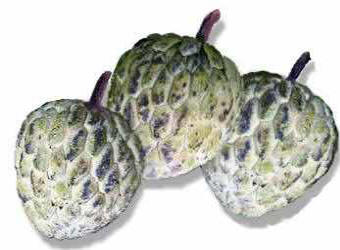 Atis is the Philippine name for Sweet Sop and Sugar Apple. Atis is a
relative to custard apple and
belongs to the Annona family. Atis is
native to Central America, the Caribbean and northern South America.
Atis was introduced to the Philippines during the Spanish times. Atis is the Philippine name for Sweet Sop and Sugar Apple. Atis is a
relative to custard apple and
belongs to the Annona family. Atis is
native to Central America, the Caribbean and northern South America.
Atis was introduced to the Philippines during the Spanish times.
Atis is a small tree that grows between 10 to 20 feet high when
fully matured with oblong leaves and green heart-shaped fruits with
polygonal tubercles. The atis fruit has a white, sweet flesh and
black seeds.
The Atis tree is easy to grow. Just plant a seed on almost any soil
and atis will grow. However, it requires tropical or near tropical
weather. When planted, Atis will begin to bear fruit in about a
year's time. It will bear fruit about 3 times a year and the
sweetest fruits are those borne during the summer months.
Atis Fruit Nutritional Value (edible portion)
|
Food Value of Atis Fruit |
Per 100g |
Vitamins & Minerals |
Per 100g |
|
Calories
Water
Carbohydrates
Protein
Total dietary fiber
Fat
Total sugars
Tryptophan
Lysine
Methionine
|
91 g
70 g
22 g
2.0 g
2.0 g
0.60 g
15%
9 mg
60 mg
7.5 mg |
Ascorbic Acid (Vitamin C)
Thiamine
Riboflavin
Niacin
Carotene
Ash
Phosphorus
Calcium
Iron
|
40 mg
0.12 mg
0.14 mg
0.80 mg
6 I.U.
1 mg
40 mg
30 mg
1.0 mg
|
Toxic Properties of the Atis Fruit
All parts of the atis tree have medicinal value. The
seeds however are poisonous. The seeds are pounded and made into
paste. This can be applied to the scalp of the head to kill hair
lice. Care should be taken when applying atis seed paste on the
scalp as this is extremely irritating to the eyes and can even cause
blindness. The paste when applied into the uterus can cause
abortion.
Atis Use as Herbal Medicine
• A decoction (boiling in water) of the leaves
induces or hastens menstrual flow and used to treat dysentery, colds
and fever. The decoction is also used for bathing to alleviate
rheumatic pain.
• Crushed leaves are inhaled for dizziness and fainting.
• The bark of the atis tree is used as a decoction for diarrhoea.
• The root is a strong purgative and used to treat dysentery.
• Infected insect bites can be cured by applying the juice from an
unripe atis fruit. |