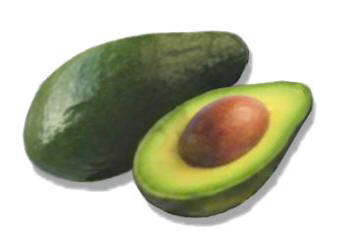
 Avocado Nutrition Information Avocado Nutrition Information
Avocado is a fruit and a tree. It often said to be the most
nutritious fruit in the world - and it is. Avocado provides more
than 25 essential nutrients such as protein, potassium, vitamin E,
C, B-vitamins,
folic acid, iron, copper, phosphorus and magnesium,
just to name a few. Avocado also provides calories for energy and
beneficial phytochemicals such as beta-sitosterol, glutathione and
lutein.
Avocado contains fat, that is why it is a good source of energy, but
the fat in avocado is mostly monounsaturated. What should be avoided
or reduced is saturated fat that is present in most dairy and animal
products. In fact, avocado helps in the absorption of nutrients that
are fat-soluble such as alpha and beta-carotene and lutein, when
food containing this nutrients are eaten with avocado. Avocado is
also high in fiber that is good for the digestive system and the
heart.
Overall, avocado is considered a complete food. With vitamins,
minerals, antioxidants, calories and fiber with no cholesterol and
is sodium free. Avocado is ideal for growing up children, adults and
even for babies, especially when blended with other fruits. For
athletes, avocado is a nutritious energy booster to rev up the
body's strength.
Avocado can be eaten as is, mixed with other fruits, as salad, a
shake, baked in breads and even made into a dip. In the Philippines,
ripe avocado is often eaten as a snack by scooping from flesh from
the skin then mixed with a some sugar and milk or cream. It is
simply delicious!
Avocado Nutrition Facts
|
Serving Size: 1/5 of medium avocado (30g / 1.1oz)
Calories Per Serving 55 |
Avocado Nutrition
Calories from fat 45 |
|
Amount per Serving % Daily Value*
|
Total Fat
Saturated Fat
Trans Fat
Cholesterol
Sodium
Carbohydrates
Dietary Fiber
Sugars
Protein
Vitamin A
Vitamin C
Calcium
|
5g
1g
0g
0mg
0mg
3g
3g
0g
1g
0%
4%
0%
|
8%
5%
0%
0%
1%
12%
|
|
|
Vitamin A
Calcium
Vitamin E
Niacin
Folate
Magnesium
Vitamin C
Iron
Riboflavin
Vitamin B6
Pantothenic Acid |
0%
0%
4%
2%
6%
2%
4%
0%
2%
4%
2% |
|
*Percent of daily values are based on a 2,000 calorie diet. Daily values vary from person to person.
|
|
|
|
|