 About Mangosteen About Mangosteen
Mangosteen is the name referred to the evergreen mangosteen tree and
the mangosteen fruit. The tree is slow growing (6-24 meters high)
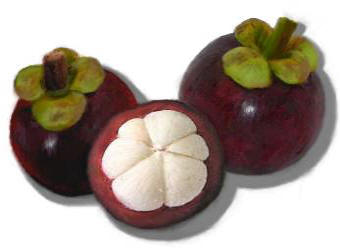
and is indigenous to Southeast Asia. The mangosteen fruit is round
in shape, dark-purple, 2 to 3 inches in diameter and contains 4 to 8
segments of snow-white, delicious soft flesh. The fruit may or may
not contain seeds. Encasing the flesh is a purple skin 6 to 10 cm
thick. Because of its taste and medicinal properties, the mangosteen is
often called "The Queen of Fruits". For centuries, the mangosteen
has been honored and cherished by the peoples of Southeast Asia.
Mangosteen as Herbal Medicine
Recent studies shows that the rind (skin) has anti-oxidant,
anti-bacterial, anti-fungal and anti-tumor properties. Initial
results also reveals that mangosteen have anti-histamine and
anti-inflammatory medicinal properties. The active therapeutic
compound found in mangosteen is called "Xanthones".
Xanthones provides many times more anti-oxidants than Vitamin C & E.
Xanthones have been receiving much attention lately from researchers
and scientist for its medicinal value. It appears to benefit every
organ of the body. The whole mangosteen fruit is the single, best
source of Xanthones.
The strong anti-oxidant properties of the mangosteen fruit fights
free radicals in the body. This helps strengthen the immune system,
promote joint and cartilage function, helps support a strong
respiratory system and helps maintain good health.
|
|
Medicinal Benefits of Mangosteen:
• Anti-tumor & anti-cancer
• Anti-inflammatory properties
• Prevents & treats infections
• For treatment of diarrhoea, cystitis, eczema, gleet and
gonorrhoea.
• Anti-proliferative activity against human breast adenocarcinoma
cell line.
• Anti-micro bacterial activity
• Inhibitory activity against histamine release |
Uses of Mangosteen:
• Dried and powdered mangosteen rind (skin) is given to cure
dysentery. The powder can be made into a cream and applied to skin
to treat eczema and other skin disorders.
• A decoction of the rind (boil in water) is cure for gonorrhoea,
cystitis, diarrhoea and gleet.
• A decoction of the whole fruit, bark and leaves of the mangosteen
tree can also be used.
• Eat the flesh of the mangosteen fruit for overall good health. |